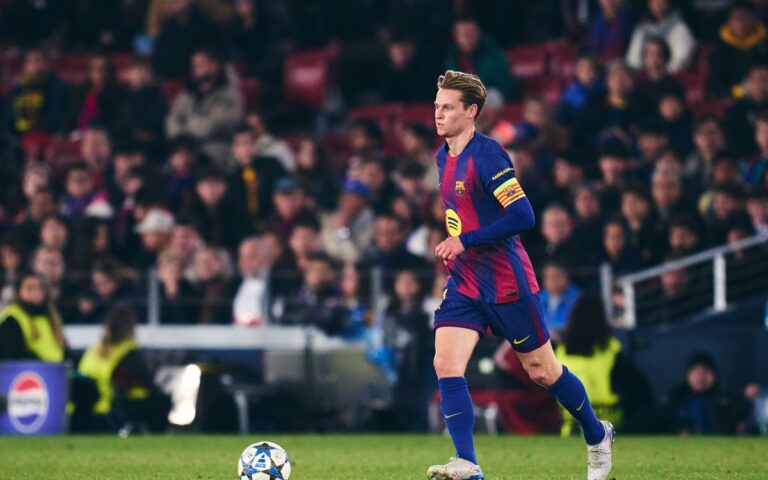
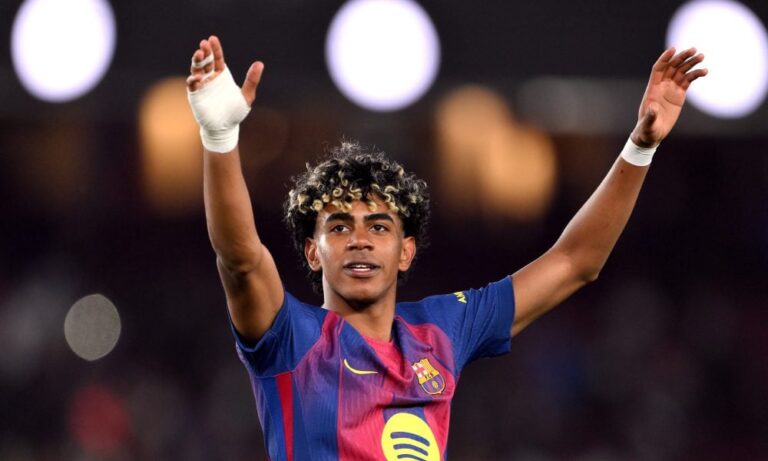
Barcelona’s new league calendar has done more than confirm the first Clasico dates of the 2026/27 season. It has dropped the first serious stress test of Hansi Flick’s title defence into a three-week corridor where one emotional peak could quickly become a structural problem.
According to the official La Liga fixture list, Barcelona begin at home to Athletic Club on August 16 before moving through a manageable-looking early run against Elche, Rayo Vallecano, Valencia, Levante, Racing Club and Sevilla. The headline, naturally, is Real Madrid’s visit to Spotify Camp Nou on October 25.
But the real pressure point comes immediately after it. Barcelona host Alaves on November 1, travel to Atletico Madrid on November 8, then return from the international break to face Villarreal on November 22 before going away to Deportivo on November 29. For a side chasing a third straight league title under Flick, that is not just a difficult block. It is a test of emotional control, squad depth and post-World Cup conditioning.
The Clasico Cannot Become The Finish Line
Flick’s biggest challenge is making sure the first Clasico is treated as a checkpoint rather than a mini-final. The Camp Nou meeting with Real Madrid will dominate the build-up, carry obvious psychological weight and shape the early title narrative. Yet the following fortnight may tell Barcelona more about their capacity to sustain another championship run.
The Alaves match, on paper, looks like the trap fixture. It sits seven days after Madrid and one week before Atletico away. That is precisely the kind of game where champions either bank quiet control or leak points through emotional fatigue.
The Atletico trip is the calendar’s sharper edge. Diego Simeone’s side have long specialised in turning rhythm into discomfort, and Barcelona will arrive there after two home fixtures carrying very different demands. Flick’s high line, aggressive counter-press and wide rotations require clean legs as much as clean ideas. If the World Cup has left his senior core short of a normal summer base, that November away day becomes a far more revealing examination.
World Cup Load Makes November More Dangerous
Barcelona’s own planning already shows why this calendar matters. The club confirmed that pre-season begins on July 13, with work at the Ciutat Esportiva before a St George’s Park camp from July 27 to August 3. The first friendly is scheduled against Birmingham City on July 31.
That would be a tidy summer in an ordinary year. This is not one. Barcelona have already said 16 first-team players are involved at the 2026 World Cup, which runs until July 19. Those who go deep will miss the cleanest part of Flick’s tactical reset and return into a shortened runway before the August 16 league opener.
That matters most by late October and November. Early-season adrenaline can mask fatigue. The second wave, once Champions League football and internationals return, tends to expose it. Barcelona’s key calculation is not simply who starts against Real Madrid. It is who can still produce repeat sprints, defensive concentration and final-third sharpness after Madrid, before Atletico, and again after the November break.
Flick’s Rotation Policy Is Already Under Review
The fixture list nudges Barcelona toward a hard truth: this title defence will not be protected by the best XI alone. It will be protected by Flick’s willingness to rotate before the warning signs become visible.
The early run gives him room to build rhythm. The November cluster gives him no room to indulge reputations. Players such as Gavi, Pedri, Lamine Yamal, Jules Kounde and Raphinha may all carry heavy international and club loads into the campaign. The medical staff will see the numbers first, but Flick must be ruthless enough to act on them.
Barcelona have the glamorous dates: Real Madrid at Camp Nou on October 25 and the return Clasico at the Bernabeu on May 9. The league, however, may be shaped by the less romantic stretch in between.
If Flick’s side come through November with control, the champions will have answered the first serious question of the season. If they stumble, the warning will be obvious: Barcelona’s biggest opponent may be the load they carried into the campaign before a ball was kicked.