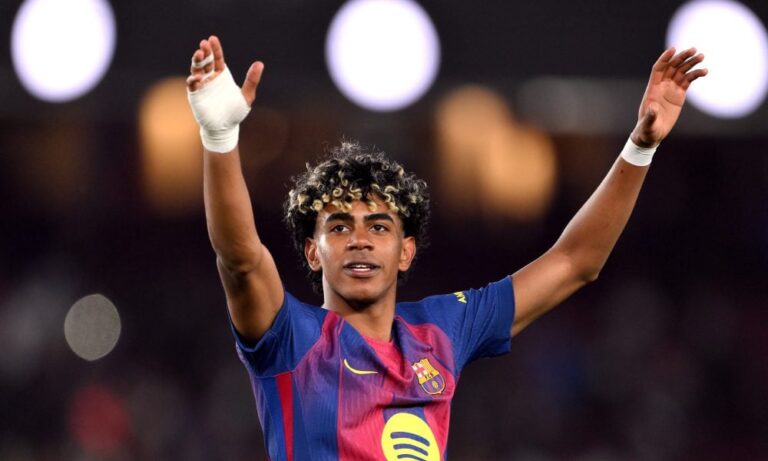
Hamza Abdelkarim’s World Cup has just shifted from a nice Barcelona academy footnote into something more serious.
Egypt’s 1-1 draw with Iran secured their place in the Round of 32, and Barcelona’s 18-year-old forward was again trusted from the bench in the closing stages. That alone matters. For a player still at the beginning of his Barça pathway, being used when a senior international side is protecting tournament qualification is not ceremonial development. It is pressure, noise and consequence.
The Guardian’s live report recorded the result as enough for Egypt to progress from Group G, while Iran were left waiting on other results. Barcelona also confirmed that Abdelkarim featured in the second half as Egypt booked their knockout place.
WORLD CUP 2026 Egypt secured their place in the Round of 32 after a 1–1 draw against Iran. Hamza Abdelkarim featured in the second half.
— FC Barcelona (@FCBarcelona) June 27, 2026
A Tournament Education Barcelona Cannot Replicate
Barcelona can build technical habits at the Ciutat Esportiva. They can sharpen movement, refine receiving angles and control a player’s minutes through Barça Atlètic. What they cannot manufacture is the emotional weight of a World Cup group finale.
That is why Abdelkarim’s minutes are valuable even without a headline goal or assist. Egypt were not cruising through a dead rubber. They were navigating a volatile match, late Iranian pressure and the knowledge that one defensive lapse could alter an entire national campaign.
For an 18-year-old attacker, those experiences accelerate understanding. He is learning how senior football changes when game state becomes more important than expression. He is seeing how a forward’s role stretches beyond chance creation: pressing triggers, outlet runs, time management and positional discipline all become part of survival.
The important detail is that Egypt are not using him as a novelty act. Abdelkarim is being asked to close games, hold shape and absorb pressure in a side built around experienced senior names.
Barcelona made the Hamza Abdelkarim deal because the upside is obvious. The World Cup is now giving them an early stress test.
The VAR Moment That Shows The Stakes
The night’s defining controversy also put Abdelkarim closer to the story than a simple substitute appearance suggests. SB Nation’s offside explainer noted that Iran had a stoppage-time winner ruled out by VAR, with the offside line judged against Abdelkarim as the second-last defender after Egypt’s goalkeeper had moved out of position.
That is an extraordinary situation for a young forward to live through. One line, one recovery position and one VAR review separated Egypt’s qualification story from a possible collapse.
It also underlines why tournament football is so useful for player development. Abdelkarim did not need to dominate the match to experience its sharpest edge. He was placed inside a moment where concentration, spatial awareness and nerve carried genuine cost.
Why Flick Should Track This Closely
Hansi Flick’s immediate first-team plans are crowded, and Abdelkarim is not about to leapfrog Barcelona’s senior forwards overnight. That should not flatten the significance of this run.
Barcelona’s best academy promotions usually arrive when talent and maturity meet at the same time. Abdelkarim’s technical ceiling brought him into the club’s orbit; Egypt are now testing the maturity part in real time.
The next stage is not hype. It is calibration. Barcelona will need to manage his return carefully, balancing the confidence of a World Cup knockout run with the physical and tactical demands of adapting to Spanish football.
Still, this is exactly the kind of problem a development department wants. Abdelkarim is not just collecting minutes. He is collecting tournament scar tissue before most prospects his age have played meaningful senior football. For Barcelona, that makes Egypt’s progress more than an international subplot. It makes it a quiet win for the club’s long-term attacking pipeline.