There are World Cup performances that create a transfer rumour, and there are World Cup performances that force a manager to redraw the inside of his own squad.
Pau Cubarsi is moving rapidly into the second category.
Barcelona already knew they had a centre-back with rare composure. Hansi Flick trusted him through a title-winning domestic campaign, and the club have built much of their recent defensive identity around his calm first pass, brave positioning and ability to defend huge spaces behind an aggressive line.
What Spain have received at the 2026 World Cup, though, is something even more valuable: proof that Cubarsi can carry that responsibility away from Barcelona’s familiar ecosystem, under tournament pressure, against different physical profiles, and with the national spotlight fixed on every touch.
That matters because Barcelona’s summer is not clean. The club have confirmed 16 first-team players at the World Cup, just one short of their Qatar 2022 record. The same club schedule has Flick’s squad due back for pre-season testing on July 13, with a St George’s Park camp from July 27 to August 3.
Between those dates sits the real issue. Barcelona are not merely waiting for bodies to return. They are working out who can be trusted to define the next version of the side.
Cubarsi Has Turned Spain’s Defence Into A Barcelona Argument
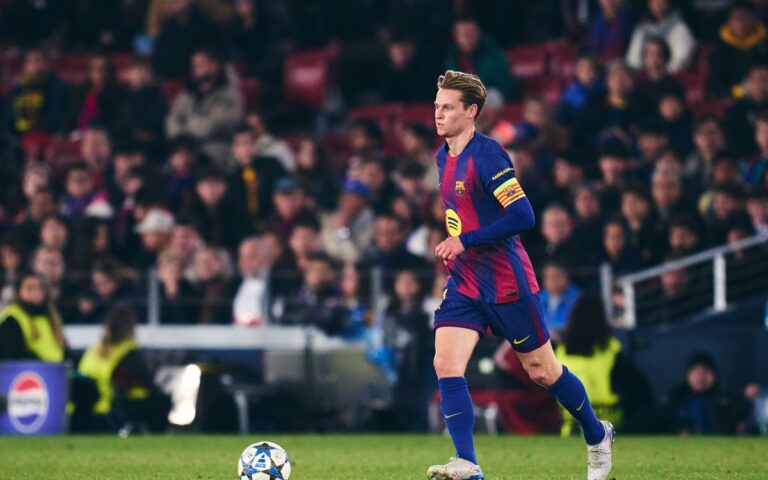
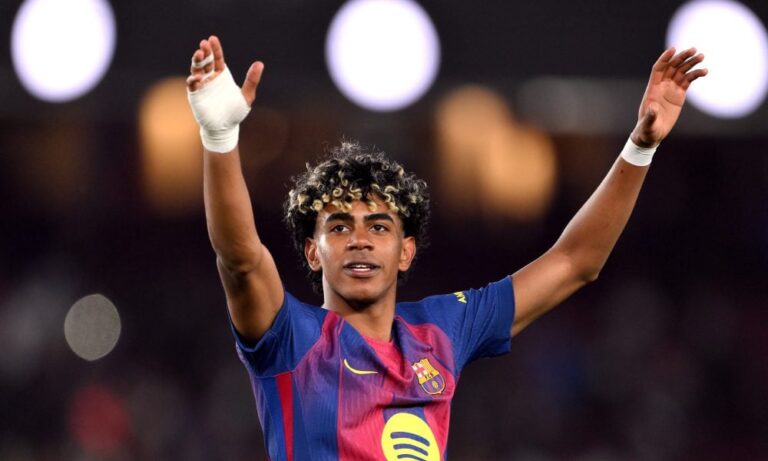
Spain’s final group-stage win over Uruguay gave Flick the clearest evidence yet. Barcelona’s official World Cup diary described Cubarsi as producing a “stellar display” at the heart of the defence as Spain beat Uruguay 1-0, with Pedri and Lamine Yamal also starting and Dani Olmo and Ferran Torres adding minutes from the bench.
That is a heavy Barcelona footprint on a major tournament match. Yet Cubarsi’s role stands apart because of where he plays. An attacker can drift in and out of influence. A midfielder can be protected by possession. A centre-back has no hiding place when a knockout-standard game turns into a duel of concentration, timing and nerve.
Against Uruguay, Spain did not need Cubarsi to look spectacular. They needed him to make the game feel manageable. That is precisely the kind of defensive authority Barcelona have searched for since Gerard Pique’s decline began to open a structural vacuum.
The wider numbers sharpen the point. Spain have carried eight Barcelona players in the squad: Lamine Yamal, Eric Garcia, Pedri, Gavi, Cubarsi, Dani Olmo, Ferran Torres and Joan Garcia. That makes the national team a live test of Barcelona’s own core, not just an international subplot.
For Flick, the key distinction is that Cubarsi is not simply surviving inside that group. He is becoming one of its reference points.
The Centre-Back Hierarchy Is No Longer A Reputation Contest
Barcelona’s defensive depth looks healthy on paper. Ronald Araujo, Jules Kounde, Andreas Christensen, Eric Garcia, Gerard Martin and Cubarsi give Flick a broad range of profiles. The problem is that depth only helps if the hierarchy is honest.
Araujo remains the most physically imposing defender in the group. Kounde offers elite one-v-one defending and right-sided security. Christensen brings positional order when fit. Eric Garcia has rebuilt his value through versatility. Gerard Martin has emerged as a left-footed option who changes the geometry of build-up.
Cubarsi, however, gives Barcelona the rarest commodity in Flick’s system: a defender who can start attacks without slowing them down and still defend high-risk spaces without panic.
That trait is not cosmetic. Flick’s Barcelona scored 95 league goals last season and went through a run of 55 consecutive league matches with at least one goal between December 2024 and May 2026, according to the club’s own season record review. Those attacking numbers are tied directly to how early and how boldly Barcelona recover the ball.
If the defensive line drops five metres because the centre-backs cannot cope with space, the attack loses oxygen. If the first pass from the back becomes predictable, Pedri receives under pressure, Yamal gets fewer early isolations, and Barcelona’s wingers start attacking settled blocks rather than broken structures.
This is why Cubarsi’s World Cup matters so much. It is not a nice development story. It is tactical infrastructure.
Flick’s Pre-Season Clock Makes The Decision More Urgent
Barcelona’s pre-season schedule leaves little time for vague experimentation. The first team are due back on July 13 for medical checks and physical tests, then they head to England for a camp at St George’s Park. Their first confirmed friendly is against Birmingham City at St Andrew’s on July 31.
That match is not glamorous in the usual commercial sense, but it is strategically useful. Birmingham will offer intensity, direct running and a very English physical test at precisely the moment Flick needs to know which defenders are ready to handle uncomfortable transitions.
The World Cup complicates that process. Players who go deep in the tournament will return later, with managed workloads and imperfect rhythm. Others may arrive earlier but emotionally flat after elimination. For Barcelona, the first month of pre-season will be less about creating a finished team and more about separating fixed points from rotation pieces.
Cubarsi is moving toward fixed-point status.
That does not mean Barcelona should overload him. He is still 19, still exposed to the cumulative strain of senior football, and still playing a position where one misjudgement can be inflated into a national debate. But modern elite clubs do not protect young defenders by pretending they are squad options when their performances say otherwise.
They protect them with clarity, workload control and the right partner.
The Partner Question Is Now Barcelona’s Real Puzzle
The sharper debate is not whether Cubarsi belongs in Flick’s best XI. It is who gives him the cleanest platform.
Araujo offers recovery speed and dominance in duels, but his fitness record and Uruguay’s difficult World Cup have made his summer less straightforward. Kounde can play inside or at right-back, yet using him centrally changes the full-back balance. Christensen is tactically polished but cannot be treated as a guaranteed week-to-week solution until his availability pattern is stable. Eric Garcia and Gerard Martin both give Flick controlled possession options, though neither carries Araujo’s raw defensive ceiling.
That is why Cubarsi’s surge is both a gift and a complication. The more authoritative he looks, the less Barcelona can make the centre-back call on seniority.
Flick has already shown he will reward function over status. His best Barcelona sides have been built on rhythm: aggressive counter-pressing, fast rest defence, quick access into midfield and a front line that starts receiving before the opponent is comfortable. Cubarsi supports all of those things.
The danger is assuming one tournament automatically settles everything. It does not. International football is slower in some phases, emotionally heavier in others, and less rehearsed than club football. But it does reveal players who can think under stress. Cubarsi is passing that test.
Barcelona’s Next Defensive Era Is Arriving Early
The emotional pull of Cubarsi’s rise is obvious. A La Masia centre-back, technically serene, Catalan, already trusted by club and country, naturally invites comparisons with the club’s great homegrown defenders. Those comparisons should be handled carefully. They are useful for headlines and dangerous for development.
Barcelona do not need Cubarsi to become a symbol before he becomes a complete defender. They need him to become the organising piece of a defence built for Flick’s football.
That is a more demanding role than nostalgia allows. It means controlling depth, recognising when to step in, knowing when to delay rather than tackle, and carrying the ball into midfield without turning bravery into recklessness. It also means being the calmest player in a back line that will inevitably suffer because Flick’s attacking idea asks defenders to live with risk.
For supporters following every Barcelona angle from this World Cup, the temptation is to file Cubarsi’s performances beside the usual tournament excitement. That undersells the story. This is not just about Spain reaching the knockouts, or another academy player gaining international shine. It is about Barcelona’s internal power map shifting in real time.
Read Barcelona has already tracked the wider World Cup pressure facing Flick’s squad in its features coverage. Cubarsi now gives that pressure a different edge. He is not merely another player to be managed back into condition. He may be the player around whom the defensive structure is managed.
That is the real consequence of his tournament.
When Barcelona report back in July, Flick will have senior defenders to assess, minutes to distribute and physical data to absorb. But the biggest call may already be forming: Cubarsi has done enough in a Spain shirt to make Barcelona’s centre-back hierarchy answer to performance rather than reputation.
For a club that wants to keep attacking with the same aggression, that is not a future concern. It is the first major decision of pre-season.