Quique Setien has put a sharp tactical frame around one of Barcelona’s most important World Cup subplots: Spain are not yet extracting Pedri’s Barcelona version.
The former Barcelona coach, speaking on Carrusel Canalla, argued that Pedri communicates far more naturally with his club team-mates than with Spain’s current midfield structure. That is more than a pundit’s line. It lands before Spain’s round-of-32 tie against Austria and speaks directly to the way Hansi Flick has protected Pedri’s influence at club level.
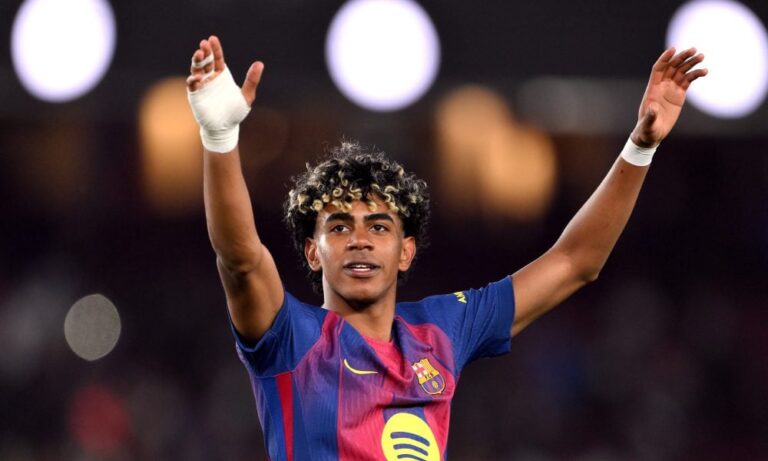
FC Barcelona’s own World Cup diary notes that Pedri, Lamine Yamal and Pau Cubarsi all started Spain’s 1-0 win over Uruguay, with Dani Olmo and Ferran Torres adding minutes from the bench. Spain advanced, but Setien’s criticism asks a harder question: if Pedri is starting, why is Spain still having to search for rhythm?
Quique Setien analiza en el #Carrusel Canalla el rol de Pedri en la @SEFutbol.
— Carrusel Deportivo (@carrusel) June 29, 2026
Why Setien’s Point Matters For Barcelona
The quote that cuts through is simple. As carried by Mundo Deportivo, Setien said Pedri communicates much better at Barca with the team-mates he normally has around him. He also pointed to Spain’s difficulty filtering passes through tight spaces when opponents retreat into compact blocks.
That is the Barcelona lesson. Pedri is not just a possession player. His best work comes from the timing around him: the third-man run, the winger holding width for half a second longer, the interior moving away to create the receiving lane. Those mechanisms are daily habits, not tournament shortcuts.
Flick’s value to Barcelona has been making those habits repeatable. The German has not simply asked Pedri to take more touches. He has placed him in zones where the next pass has a pre-built answer, particularly when Lamine Yamal pins the far side and a central runner fixes the last line.
Austria Test Turns This Into More Than A Spain Debate
Austria are an awkward opponent for this argument because Ralf Rangnick’s side will not politely leave Spain’s midfield to conduct the tempo. Their pressure, physicality and vertical counter-punching can turn a slow Pedri structure into a risk, not a luxury.
That is why this matters for Barcelona beyond national-team viewing. If Pedri carries Spain through the knockout rounds while fighting for rhythm rather than receiving clean support, Flick inherits both a tired player and a tactical warning. The club cannot treat his influence as automatic once pre-season begins.
There is also a selection clue in Setien’s comments. He argued for more natural connections, with Dani Olmo and Lamine Yamal named as players who can help create the kind of short-distance understanding Spain have lacked. Barcelona already know that logic. It is the reason Pedri’s club ceiling rises when the structure around him is narrow enough to combine, but wide enough to stretch the press.
Flick’s Blueprint Is Already Clear
The temptation is to frame Setien’s remarks as criticism of Luis de la Fuente. For Barcelona, the more useful reading is narrower: Pedri remains elite, but only if the team around him is built to receive his pauses, disguise and acceleration.
That should sharpen Flick’s summer planning. Barcelona have already seen how World Cup minutes can complicate their restart, a theme ReadBarcelona examined in the wider World Cup rotation test. Pedri now adds a tactical layer to the workload question.
The wider point is squad management as much as aesthetics. Barcelona have enough runners, finishers and touchline threats to make Pedri decisive without asking him to force every pass. Spain’s problem shows what happens when those lanes arrive late.
If Spain solve the spacing issue against Austria, Barcelona get their midfielder back with another pressure match banked. If they do not, Flick gets an even clearer reminder: Pedri is not a plug-in controller. He is the player Barcelona must keep building the room around.