The Barcelona salary cap has jumped by almost €150 million. LaLiga published its post-window update on Thursday and the Blaugrana’s limit for the 2026/27 season now stands at €582.769m, up from the €432.807m they carried through the summer.
It is the second substantial rise in a row, and it lands at the end of a window in which Barca were finally able to operate like a normal big club rather than a club permanently negotiating with a spreadsheet.
The new LaLiga table: Madrid still out in front
LaLiga sets a Limite de Coste de Plantilla Deportiva (LCPD) for all 42 professional clubs, and the fresh numbers keep Real Madrid comfortably top. Their ceiling has gone from €761m to €832m. Barca are second on €582.769m, with Atletico Madrid third after climbing from €336m to €361.287m, per Mundo Deportivo. At the other end of the scale, Sevilla can spend just €20m.
The gap to Madrid is still enormous — roughly €250m — but the direction of travel matters more than the ranking. In February, Barca’s limit moved from €351.284m to €432.807m, an €81m increase. This one is nearly double that.
How the Barcelona salary cap is calculated
The LCPD is not a number LaLiga invents. It takes each club’s budgeted income — season tickets, matchday revenue, commercial deals, television money, transfer fees, a projection of how far they expect to go in Europe — then subtracts non-sporting costs, debt repayments and any losses carried over from the previous campaign. What is left is what the club may spend on players and coaching staff.
Exceed it and normal business in the transfer market becomes impossible, which is the position Barca spent several summers in. This one was different: the club worked under the 1:1 rule, able to spend a euro for every euro banked, and registered its signings without the annual deadline-day drama.
Why the number moved so far
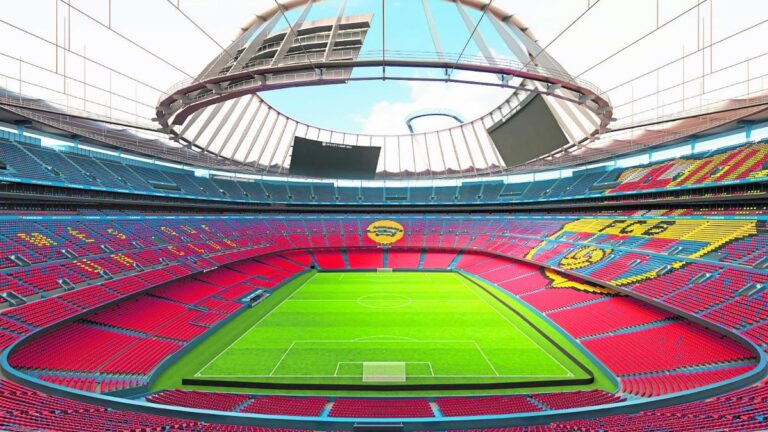
Two things pushed it. The first is income, including a Spotify Camp Nou that is filling up again. The second is a genuinely brutal summer of wage-shedding.
Robert Lewandowski’s exit on a free removed one of the largest salaries on the books. Ferran Torres went to PSG for around €48.5m, Ansu Fati to Monaco and Tommy Marques to Braga for roughly €11m each, Hector Fort to Real Sociedad for about €8.5m, Jofre Torrents to Ajax for €6m and Jan Virgili to Club Brugge for €4.5m. Add the smaller departures and the club cleared well over €100m in sales alone. The loan of Ronald Araujo to Liverpool helped too, with the English club covering his wages in full.
Against that, Barca spent close to €175m on Anthony Gordon, Karim Adeyemi, Rodri, Gabriel Jesus, Jesse Bisiwu and Hamza Abdelkarim, with Joao Cancelo arriving as a free agent. Deco’s summer of ins and outs was expensive, but it was funded.
What it means for January
A higher ceiling does not hand Hansi Flick a blank cheque — the cap is a limit on what can be spent, not a pot of money sitting in an account. But it does give the club room, and that room is likely to matter in the winter window.
Deco has already confirmed Barca made a formal approach for Julian Alvarez this summer before the deal collapsed, and a return in January has been openly discussed. Any move of that size would need headroom under the LCPD. As of Thursday, there is a good deal more of it than there was on Wednesday.