Barcelona spent the summer selling everything that was not nailed down, and one of the last pieces of income they had pencilled in never arrived. The Ez Abde sell-on clause — 20 per cent of any future transfer, banked when the winger left for Real Betis — was worth around €8.6m to the Blaugrana on deadline day. Betis turned the money down, and Barça are left counting a hole they had already written into the budget.
The detail comes from Mundo Deportivo, and it was effectively confirmed on the record by the man who made the call: Betis president Ángel Haro, who admitted his club walked away from what he himself described as a great opportunity.
What the Ez Abde sell-on clause was worth to Barcelona
The mechanics are simple enough. When Barcelona sold Abde to Betis for €7.5m, they kept 20 per cent of the profit on any subsequent sale. Abde then did what Barça hoped he would do — he got very good, very quickly, and he attracted the Premier League.
His release clause at the Benito Villamarín stands at €60m. Had an English club simply paid it, Barcelona’s share would have been in the region of €12m for doing nothing more than answering the phone. Nobody went that far, but Everton came close enough to matter.
The Merseyside club tabled €43m in the closing days of the window, per Mundo Deportivo, having already missed out on Joshua Zirkzee and Tammy Abraham. At that price, Barcelona’s cut would have been approximately €8.6m. A second structure was also discussed — a guaranteed €35m plus €8m in add-ons — which would have brought the Catalan club closer to €7m.
Neither happened. Newcastle United, Aston Villa and Crystal Palace had all monitored the Morocco international at various points, but it was Everton who made the serious approach, and Betis said no to all of it.
Why Real Betis refused the deal
Haro has not hidden from the decision, which makes this unusually clean as transfer stories go. Speaking after the window shut, the Betis president acknowledged his club needed a significant sale to balance the books.
“We should have made a major sale to balance the books,” he said, as reported by Barca Blaugranes, explaining that Betis carry squad costs their ordinary revenue cannot cover and need capital gains rather than turnover if they want to keep a team capable of more than fighting for eighth to fifteenth.
He then described the Abde situation directly: a great opportunity arose to sell the winger on the final day, but Betis asked for the buyout clause and would not move meaningfully below it. Haro also noted that several other departures the club wanted simply did not happen — when players say they are not leaving, he pointed out, they are not leaving, because they have contracts.
It is a defensible position for Betis. They kept a player who is arguably their best attacking asset and refused to be pushed into a discount on the last afternoon of the window, which is exactly the moment selling clubs are most likely to be squeezed. The knock-on effect is simply that a third party in Catalonia loses a payment it had no control over.
The player Barcelona let go — and kept a stake in
Abde’s route out of the club is worth remembering, because it is the reason the clause exists at all.
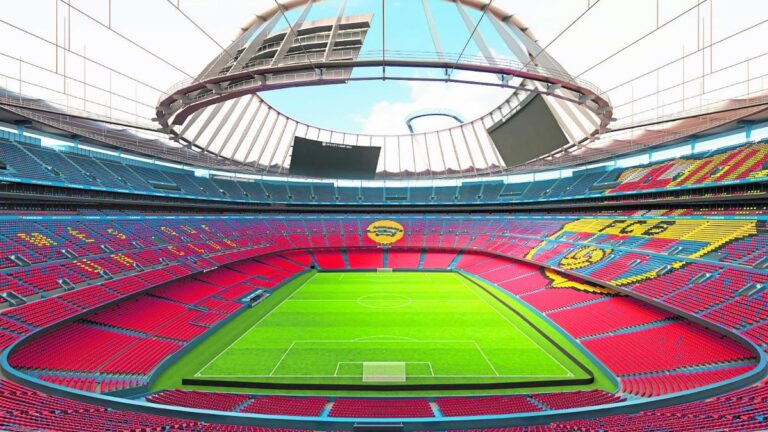
Born in Morocco, he spent time with Barça Atlètic before stepping up to the first team, without ever quite nailing down a place in it. A loan at Osasuna followed, then the permanent move to Betis for €7.5m — a modest fee for a player who had shown flashes at the Spotify Camp Nou, softened by the sell-on percentage that Barcelona’s negotiators insisted on.
That insistence has been vindicated in principle. On the numbers being discussed in England this summer, Barcelona’s original €7.5m sale was on course to become something nearer €16m. The problem is that a sell-on clause only pays when somebody else decides to sell, and Barça are entirely at the mercy of a rival club’s accounting.
The clause has not expired. It survives into January and beyond, and Everton’s interest is unlikely to disappear if Abde keeps producing. But the money is not arriving this year, and this year is when it was needed.
Why €8.6m mattered in a €174m summer
This is where the story stops being a footnote. Barcelona’s window was the most expensive of the Joan Laporta era: roughly €174m committed in transfer fees against €104m recovered in sales and rights payments, across 24 separate operations, according to Mundo Deportivo’s accounting of the market.
The spending went almost entirely forward. Anthony Gordon arrived from Newcastle for €70m plus €10m in variables, the single biggest outlay. Rodri cost €60m plus €16.5m in bonuses from Manchester City. Karim Adeyemi came in at €22m plus €7m, Jesse Bisiwu at €8.5m, Gabriel Jesus at €10m on deadline day, Hamza Abdelkarim at €1.5m and Dominik Livaković at €2m. João Cancelo walked in on a free.
The income side leaned heavily on one deal — Ferran Torres to PSG for €48.5m — with the rest assembled from a long tail of smaller sales: Tommy Marqués to Sporting Braga and Ansu Fati’s buy option at Monaco for €11m apiece, Héctor Fort to Real Sociedad for €8.5m, Jofre Torres to Ajax for €6m, Iñaki Peña to Panathinaikos for €3m, and a scattering of academy exits. Our full breakdown of Barcelona’s 2026 transfer window has every line of it.
In a summer built out of €3m and €6m pieces, €8.6m for a player who left two years ago is not loose change. It is roughly the Bisiwu fee. It is three times what Panathinaikos paid for Peña. And crucially, it is money that costs nothing to earn, which is the only kind Barcelona’s registration department genuinely likes.
What it means for January
The timing is the sharp end of this. Barcelona go into the season with a squad Flick and Deco built front-first, and with one obvious gap left open on purpose.
The left-footed centre-back the coach wanted never arrived; a late attempt to sign Ruud Nijstad from Twente did not get over the line before the deadline, and rather than force an alternative, the sporting department has left the winter window as its safety net. Reports in Spain indicate the plan is to monitor the defence through the first half of the season and act in January if needed.
There is a second January file too. Barcelona’s pursuit of Julián Álvarez collapsed in the final week of the window, and the club are expected to return for him in the winter. Both of those plans are governed by the same constraint — the room Barcelona have to register a new signing under LaLiga’s spending rules, which our piece on the club’s financial fair play margin sets out.
Every euro of expected income that fails to land narrows that room. The Abde money would not have transformed anything on its own, but it was a clean, already-modelled €8.6m sitting in the January column, and it is now a blank.
The wider point
Barcelona have become good at this — at retaining percentages, at building buy-back clauses and future rights into departures, at squeezing a second payday out of players who have already gone. More than €100m came in this summer, and a meaningful chunk of it arrived from footballers who no longer had anything to do with the club.
The Abde case is the reminder that the strategy has a flaw. Barcelona can write the clause; they cannot force the transfer. Betis were entitled to keep their best winger, and they did, and the €43m that would have triggered Barça’s payment went back into Everton’s budget instead.
Deco’s department will get another go. The clause runs on, and the Premier League clubs who looked this summer are unlikely to have stopped watching. But the accounting for 2026 is closed, and one of the numbers in it is a zero where €8.6m was supposed to be.
Transfer fees and squad information are published by FC Barcelona and LaLiga. Sell-on clause valuations and market accounting reported by Mundo Deportivo.