The Gabriel Jesus Arsenal exit was quick, quiet and, by his own account, not especially kind.
Barca’s last signing of the summer has revealed that he was pulled out of group training at the Emirates and sent to work on his own, without anybody telling him why.
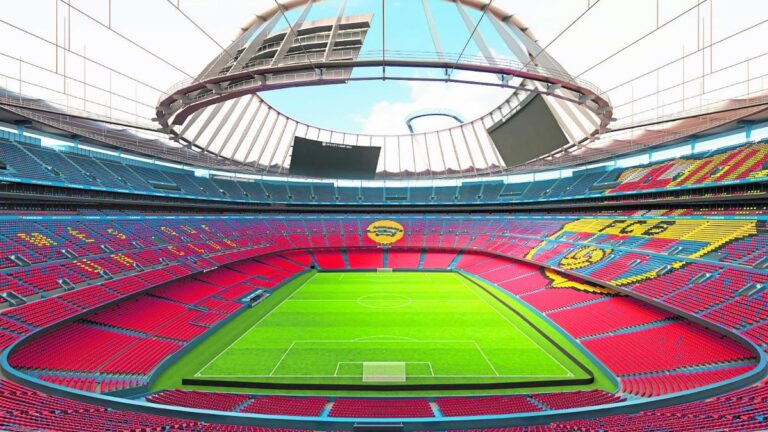
The 29-year-old Brazilian arrived at the Spotify Camp Nou for a reported €10m on deadline day, an express operation closed by sporting director Deco once Atletico Madrid refused to negotiate over Julian Alvarez.
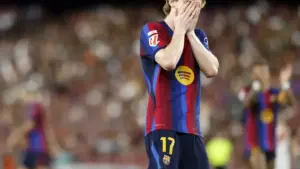
He wears the No.9 and is contracted until 2029. On Sunday he made his debut in the 5-0 win at Valencia; on Wednesday he scored his first goal in front of a full Camp Nou in the 5-1 dismantling of Feyenoord.
How the Gabriel Jesus Arsenal exit turned sour
Speaking to SportyTV, Gabriel Jesus described the strange final weeks of a five-year spell in north London.
“The truth is I was training. I did the whole pre-season with Arsenal, normally,” he said, per Mundo Deportivo.
“Obviously I already knew I probably wasn’t going to play there, or that I wasn’t going to get many opportunities, but nobody had said anything to me.”
“I’m a professional, you know, so obviously I kept training with the group. Then, suddenly, they had me training on my own. I kept training and giving my maximum to be ready in case I got the chance to play at the highest level again.”
It is a familiar kind of limbo — a squad player quietly moved to the margins while a club waits for a bid — and it is a notable way to treat a forward who had spent four seasons as an Arsenal player.
He was not injured. He was simply no longer in the plan, and nobody at the club appears to have said so out loud.
Why he said yes to Barca immediately
What followed was the opposite experience. Gabriel Jesus went out of his way to credit the people who made the move happen, naming “the work of Deco, the president, the club and my agent” in delivering a boyhood ambition.
“We were clear that I had the chance to come and I said yes straight away, without anything else mattering,” he said. “I’m very happy to be here.”
That phrase — without anything else mattering — is the tell. Barca’s pursuit of a centre-forward this summer was long, public and mostly unsuccessful: the Alvarez saga ran for weeks before Atletico shut the door, and Deco has since admitted the club expect to revisit the Argentine in January. Gabriel Jesus was not the headline solution. He was the one who wanted it least conditionally.
The role waiting for him
Hansi Flick’s forward line no longer contains Robert Lewandowski, who left as a free agent for Chicago Fire, or Ferran Torres, sold to PSG. That is a lot of penalty-box output to replace, and it has largely been shared out so far: Raphinha has been the storm at the front of this team, Lamine Yamal is generating goals at a startling rate, and Karim Adeyemi and Anthony Gordon arrived to add pace from wide.
The No.9 shirt, though, is a specific job. Gabriel Jesus is not a like-for-like Lewandowski — he is a presser, a runner and a creator of chaos as much as a finisher — but his first Barca goal against Feyenoord was a striker’s finish, taken with the instinct of somebody who has spent a decade in elite penalty boxes.
His value to Flick may end up being as much about the dressing room as the scoresheet. This is a young squad — Marc Bernal, Pau Cubarsi, Lamine, Fermin Lopez and Gavi are all 23 or younger — heading into a European campaign it genuinely believes it can win. A 29-year-old with Premier League titles, a Copa America and Champions League nights behind him is useful ballast.
And there is one more thing a player treated like Gabriel Jesus was at Arsenal tends to bring: motivation that needs no manufacturing. The Brazilian says the bitter ending is behind him. On the evidence of his first ten days as a Barca player, it has not been forgotten.