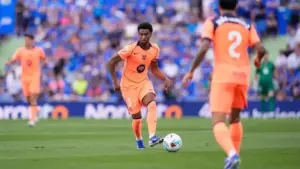
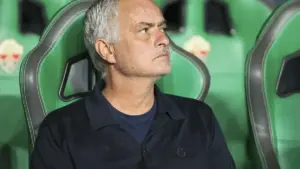
Rodri Barcelona history is being written slowly. While the squad flew to Alicante on Saturday evening, Barca’s €60m summer signing stayed behind: a second day training apart, no place on the plane for the LaLiga opener at Elche, and a pencilled-in return to the group on Monday. “He’s a fantastic player, a leader, and he has a fantastic personality,” Hansi Flick said of him this weekend. What the German did not mention is that the man wearing 16 is chasing something only one Madrid-born footballer has ever done in blaugrana.
Rodrigo Hernandez was born in Madrid on 22 June 1996. According to Mundo Deportivo’s Sergi Sole, that makes him only the 14th male footballer born in the Community of Madrid to play for FC Barcelona in almost 127 years — and if he wins the Champions League in a Barca shirt, he will be just the second of those 14 to do it.
Munir’s record, and why it has stood alone
The only one so far is Munir El Haddadi, born in El Escorial in 1995, a European champion as a Barca player. That is the entire list. Thirteen madrilenos before Rodri, one European Cup between them.
Rodri already has his own, of course — the 2023 final against Inter, settled by his goal for Manchester City. Doing it again in blaugrana would be a different order of achievement, and it is the quiet subtext of a €60m move that the club framed from the start as a decade-long project. He signed calling Barcelona “my first choice”.
Rodri Barcelona history: a very short list
The names Sole digs out are a reminder of how thin the Madrid pipeline into the Camp Nou has always been. It opens with the Morales Veloso brothers. Arsenio — also recorded as Antonio, depending on the source — debuted in March 1912, won the Copa Pirineus and the Campionat de Catalunya in that first year, and left in 1915. His brother Rafael, another forward, followed him into the side two months later, won nothing, spent a year at Espanyol, came back after the summer of 1913 and moved to Sabadell in 1916.
Then a decade of nothing. Goalkeeper Joaquin Pascual arrived from Racing Madrid and spent two seasons at the club between 1922 and 1924, never overlapping with Ricardo Zamora but facing him in a derby against Espanyol, before leaving for Tenerife with a Catalan championship in his luggage. The forward Carlos Sanz de la Huerga turned up in 1933 for a brief spell and two official goals in three games. And in 1940 came Juan Rocasolano Camacho, anonymous at the time, rather more famous six decades later as the great-uncle of Queen Letizia, who played eight games in blaugrana.
Where the madrilenos did win
Barca’s Madrid-born success stories are mostly found indoors. Aito Garcia Reneses, Roberto Duenas, Rodrigo de la Fuente, Lorenzo Rico, Paco Sedano and Sergio Lozano all built glittering careers at the Palau Blaugrana, with Duenas and De la Fuente crowned European champions with the basketball side in 2003.
In football, the honour roll belongs to the women. Sole names Sonia Bermudez, now Spain’s head coach, alongside Jenni Hermoso and Vicky Lopez — Madrid-born culers who have won the European title.
First things first
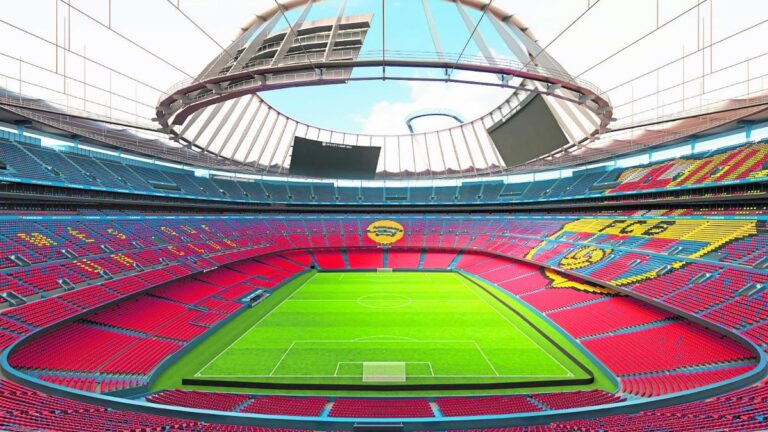
Before any of that, Rodri has to get on the pitch. He arrived after a World Cup, has been managed carefully since, and Barca’s schedule does not exactly ease him in: Elche on Sunday, the rearranged opener against Athletic Club at the Spotify Camp Nou on Thursday, then Rayo Vallecano at home on 31 August. His individual programme has been the story of the week, and Flick has been careful not to promise a date.
It is a strange kind of pressure, being the 14th of anything in 127 years. But for a player who left Manchester with a Champions League medal and chose Catalonia to chase another one, the history is at least pointing in a direction he already knows.
Historical detail reported by Sergi Sole for Mundo Deportivo; Flick’s comments from his pre-match press conference of 22 August 2026.