At a glance
- FC Barcelona and the rest of the football world has honoured Johan Cruyff to mark the 10th anniversary of his March 2016 passing.
- Cruyff changed Barça forever as a player, coach and the brains behind the club’s famous model of play.
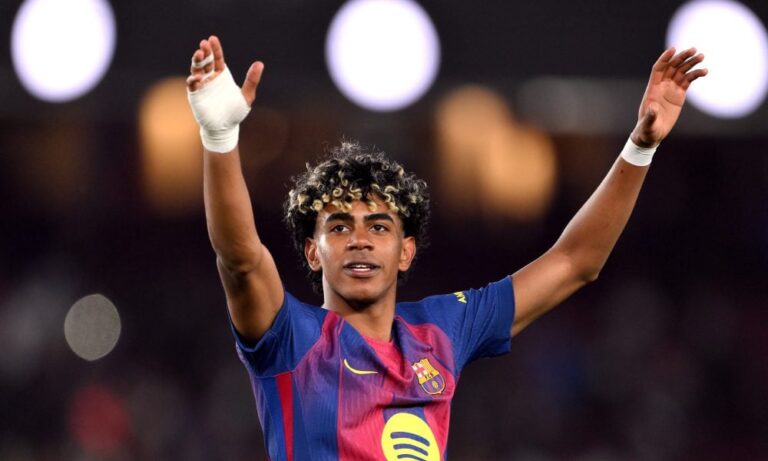
- His impact is felt from La Masia up, and Hansi Flick is believed to continue his philosophy of brave, attacking football.
Today, on 24 March, 2026, FC Barcelona and the footballing world stand still.
It’s been a decade since Johan Cruyff left us physically, but his legacy, far from fading, is now more enduring and essential than ever.
We’re not just talking about a legendary player or a manager here, and instead the architect who was those things while also laying the moral and footballing foundations of what we now know as the Barça ecosystem.
A Tangible Legacy: More than just an FC Barcelona philosophy
Ten years after his passing, Cruyff’s influence remains palpable and unwavering.
From the bronze statue that stands guard over the esplanade at the Spotify Camp Nou, to the Johan Cruyff Mini Estadi by the side of the Joan Gamper CT in Sant Joan Despi near the airport, his name serves as a constant reminder that “football is played with the brain”.
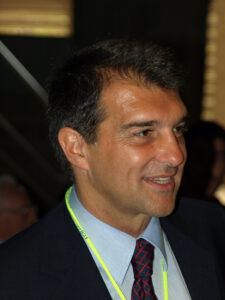
During commemorative events marking this anniversary, figures such as Joan Laporta – who made him an honorary president and has been emotional this week – have recalled that Johan’s legacy is not nostalgia. It’s an active instruction manual.
Now a key figure in Ajax’s sporting structure following his behind-the-scenes role with the Blaugrana, Johan’s son Jordi – who has the most typical Catalan name – has highlighted how the recently released documentary CRUYFF, by Barça One, sums up a universal truth: “No one has seen or sees what he saw.”
The three pillars of Cruyffism at FC Barcelona in 2026
To understand why Barça remains unlike any other club, we must return to its three sacred principles:
- The ball as a defensive tool: ‘If you have the ball, the opposition doesn’t.’ It’s a concept which, in today’s hyper-physical game, remains the only way for skill to prevail over physical strength.
- Risk as spectacle: Like Hansi Flick, Cruyff would rather win 5–4 than 1–0. He understood before anyone else that the Spotify Camp Nou is not just a stadium; it’s a theatre where the fans demand to be entertained.
- Prioritising the youth academy: It was he who convinced former president Josep Lluís Núñez that money should be spent on the pitch rather than stay in the bank. Cruyff backed La Masia when no one else believed in it, and took a chance on budding stars such as Pep Guardiola to form part of his early-90s ‘Dream Team’. Once more, this is also a Flick trait as we’ve witnessed recently with the promotions of Marc Bernal and Xavi Espart.
A Culer’s perspective
If you ask me what Johan means to someone who has grown up breathing the air of Barcelona and feeling the Blaugrana colours, I’d say he’s our very identity.
For a Catalan, Cruyff wasn’t just a star signing in the 1970s; he was the man who taught us to shake off our historical ‘victim mentality’.
Before him, Barça was a club that suffered; after him, it became a behemoth that enjoyed itself.
I remember the stories told by Culers about that epic 5-0 win at the Bernabéu in 1974. But above all, I remember the sense of security we felt having him on the bench. With Johan, we felt we were always right, even if we lost.
Ten years on, when I see a youngster from La Masia play a first-time pass or hear the murmur of the stadium demanding good football, I know he’s still there.
Johan gave us pride in being different. He gave us a style that the world envies and that we protect like a family heirloom.
Gràcies, Johan. Per tot i per sempre. Seguirem sortint i gaudint.
Thanks, Johan. For everything and forever. We’ll keep going out and enjoying ourselves.